10 Steel Platforms Buying Tips for Global Buyers

Time:2026-10-08 Author:Mason
0%

Steel Platforms support workers, equipment, and materials in factories, warehouses, ports, and construction sites. Their safety depends on more than steel thickness. Load capacity, span, surface treatment, access design, and installation quality all matter. A platform that looks robust may still fail under concentrated loads or repeated vibration.

The World Steel Association reported approximately 1.89 billion tonnes of crude steel production in 2023. Its World Steel in Figures 2024 also identifies construction and infrastructure as major steel-consuming sectors. This scale creates many supplier choices, but it also creates inconsistent specifications. Global buyers should request traceable material certificates, approved drawings, welding records, and independent inspection reports. ISO 14122 provides important guidance for permanent access systems, while EN 1090 may apply to structural steelwork placed on the European market. Local requirements can differ.

Details decide reliability.

A practical buying review should examine live loads, dynamic forces, guardrail height, grating openings, drainage, corrosion exposure, and emergency access. In coastal areas, painted carbon steel may deteriorate faster than expected. Galvanized steel or stainless steel can reduce maintenance, but the correct choice depends on chemicals, humidity, and budget. The World Bank’s Commodity Markets Outlook also shows why steel and energy price movements can affect project costs and delivery planning.

No checklist removes every uncertainty. Even experienced buyers sometimes compare prices before comparing engineering scope. That mistake is expensive. The following ten Steel Platforms buying tips connect technical evidence, supplier capability, compliance documents, and lifecycle value. They are designed for clearer decisions across borders, although every project still requires competent local review.
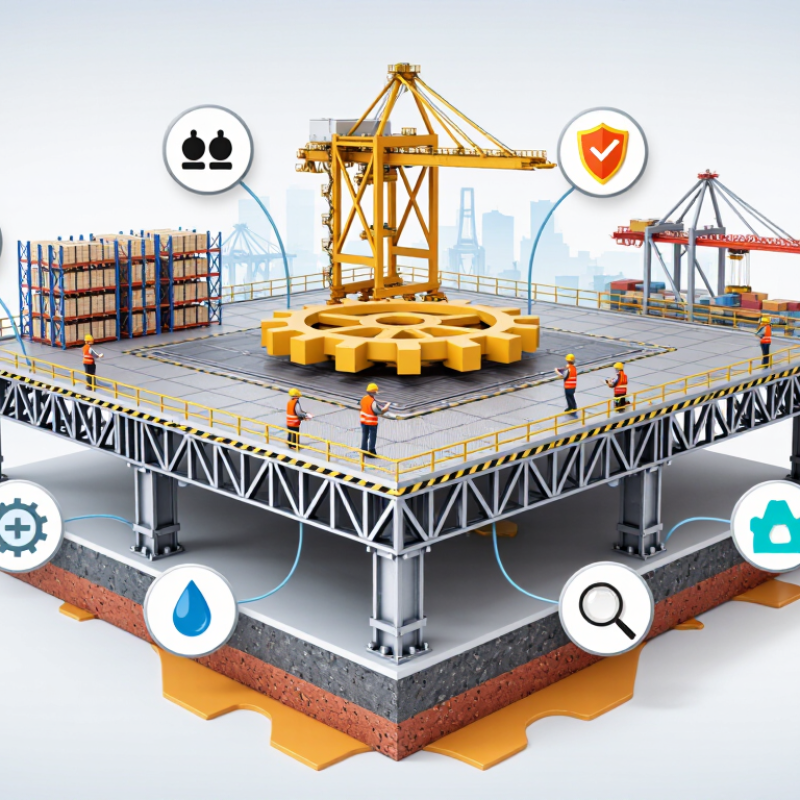
10 Steel Platforms Buying Tips for Global Buyers

Define Steel Platform Use, Load Capacity, Size, and Site Conditions

When buying a steel platform, define its real use before comparing prices. Is it for maintenance, storage, production access, or equipment support? Each purpose changes the required live load, impact allowance, handrail design, and access route. The World Steel Association reported 1,888.2 million tonnes of crude steel production in 2023, but abundant material does not guarantee a suitable platform. Steel grade, welding quality, corrosion protection, and fabrication tolerances still matter.

Tips: Write the load case in kilograms and location, not only “heavy duty.” Include workers, tools, pallets, vibration, wind, snow, and possible dropped objects. Confirm whether the platform is fixed, mobile, indoor, outdoor, or exposed to chemicals. Standards such as EN 1991-1-1, ASCE 7, and ISO 14122-3 can guide loading and access decisions, but local rules remain decisive. A copied catalogue load may be wrong for your site.

Measure the usable length, width, headroom, doorway clearance, and foundation condition. Check floor flatness and anchor positions. In practical site reviews, small clearance errors often create larger installation delays than steel price changes. The International Labour Organization estimated 2.93 million work-related deaths annually, with many linked to unsafe working conditions. Good design cannot remove every risk. It can expose weak assumptions earlier. I still question neat spreadsheets. They may hide changing loads, uneven floors, or poor drainage. Ask for engineering calculations, material certificates, weld inspection records, and a maintenance plan before approving the purchase.

Steel Platform Buying Guide: Representative Design Live Loads

Define the platform use before selecting steel members, deck type, and support spacing. The representative loads below are commonly used planning benchmarks for preliminary comparison; final values must be verified against the applicable local building and structural codes.

Load capacity is shown as uniformly distributed live load in kilonewtons per square metre (kPa). Equipment point loads, impact, vibration, guardrails, stairs, wind, seismic effects, corrosion allowance, and site conditions may require additional design capacity.

Compare Steel Grades, Surface Treatments, and Corrosion Protection

10 Steel Platforms Buying Tips for Global Buyers

Steel grade is the first durability decision. Carbon steel offers value, while weathering steel may suit controlled outdoor exposure. Stainless steel performs better in chloride-rich areas, but its higher price needs justification. Check yield strength, weldability, and impact requirements against the project standard. A strong grade cannot compensate for poor detailing.

Surface treatment must match the atmosphere. ISO 12944 classifies environments from mild indoor exposure to severe marine conditions. Hot-dip galvanizing provides a zinc barrier and sacrificial protection, while paint systems add color and extra shielding. Duplex systems can extend service life, but only when surface preparation and coating thickness are controlled. The NACE IMPACT study estimated global corrosion costs at 3.4% of worldwide GDP, with proper prevention potentially saving 15–35%. The numbers are large, yet drainage gaps still get missed.

Tip: Ask for mill certificates, coating records, and independent inspection reports. Verify dry-film thickness at edges, welds, and bolt holes. These small areas fail first. Also request salt-spray results carefully; laboratory hours do not equal real service life. My practical concern is simple: buyers often compare price before exposure risk. That order can be costly. Review standing water, airborne salt, cleaning chemicals, and maintenance access before approving the platform. A cheaper coating may look sensible today, but corrosion repairs usually disrupt operations far more than planned protection.

Verify Design Codes, Safety Features, and Global Certifications

10 Steel Platforms Buying Tips for Global Buyers

Verify the governing design code before comparing prices. A platform designed for one market may fail another market’s requirements. Check ISO 12100 risk assessment principles, ISO 14122 access requirements, and the destination country’s structural code. For European projects, EN 1090-1 may apply to fabricated structural components, while EN 10204 type 3.1 certificates can verify steel chemistry and mechanical properties.

Ask for calculated live loads, point loads, deflection limits, weld procedures, and corrosion allowances. Confirm whether the drawings show guardrails, toe boards, self-closing gates, midrails, non-slip grating, and safe stair angles. Do not guess. The International Labour Organization reported 2.93 million work-related deaths and 395 million non-fatal injuries globally in 2023. That scale makes small access details important. A 100 mm toe board, drainage holes, or a visible load plate can prevent serious mistakes.

Review ISO 3834 welding controls, welder qualifications, coating specifications, and inspection records. Confirm whether “certified” refers to the product, the factory, or only an ISO 9001 management system. These are different claims. Request independent inspection, dimensional checks, bolt traceability, and site acceptance testing. Ask how the design addresses wind, seismic movement, heat, chemicals, and maintenance access. The World Steel Association’s 2024 safety reporting shows that leading producers treat safety performance as a measurable operational priority, not paperwork. Still, documents can be incomplete. Require signed calculations, revision-controlled drawings, and certification evidence before payment.

10 Steel Platforms Buying Tips for Global Buyers - Verify Design Codes, Safety Features, and Global Certifications
No. Buying Dimension What Global Buyers Should Verify Required Documents or Data Relevant Codes, Standards, or Benchmarks
1 Design load and load combinations Confirm the platform's rated live load, dead load, concentrated load, equipment load, impact allowance, and any seismic or wind actions. Ensure the supplier has designed for the governing load combinations required at the installation site. Signed structural calculations, design assumptions, load diagrams, load-combination schedule, and a drawing showing permissible load locations. EN 1990 and EN 1991 for Eurocode-based projects; ASCE/SEI 7 for applicable U.S. loading criteria; local building and industrial regulations.
2 Structural steel design and stability Check member sizes, steel grade, welds, bolts, bracing, deflection, vibration, buckling, and connection design. Require verification of both strength and serviceability rather than relying only on a nominal load rating. Material specifications, mill certificates, connection calculations, finite-element analysis where appropriate, deflection limits, and fabrication drawings. EN 1993-1-1 for steel structures; AISC 360 for applicable U.S. projects; ISO 14122-2 for permanent platforms and walkways where applicable.
3 Guardrails, toe boards, and fall prevention Verify that exposed edges have suitable guardrails, intermediate protection, and toe boards where required. Confirm rail height, openings, strength, access gates, and protection against tools or materials falling to lower levels. Guardrail elevation drawings, opening dimensions, anchorage details, test reports, and site-specific fall-protection assessment. ISO 14122-3 for permanent stairs, stepladders, and guardrails; OSHA 29 CFR 1910.29 for applicable U.S. workplaces; local occupational-safety rules.
4 Access, stairs, ladders, and egress Confirm stair angle, tread depth, riser consistency, ladder clearance, landing dimensions, access-gate operation, and emergency escape routes. Make sure the design suits the intended traffic, carrying tasks, and maintenance activities. General-arrangement drawings, access geometry schedule, egress plan, clearance dimensions, and installation instructions. ISO 14122-1, ISO 14122-2, ISO 14122-3, and ISO 14122-4; OSHA 29 CFR 1910.23 for applicable U.S. workplaces; AS/NZS 1657 where required.
5 Flooring, openings, and slip resistance Select grating, plate, or other flooring according to drainage, contamination, footwear, dropped-object risk, and cleaning requirements. Verify that openings will not create unacceptable trip, foot-entrapment, or dropped-object hazards. Flooring load tables, opening-size data, slip-resistance test results where specified, drainage details, and product samples or approved specifications. ISO 14122-2 and ISO 14122-3 for access systems; ASTM F1637 for safe walking and working surfaces where applicable; local accessibility and workplace requirements.
6 Corrosion protection and service environment Match the coating system or stainless-steel grade to humidity, salt exposure, chemicals, temperature, abrasion, and expected maintenance intervals. Review crevice, drainage, and dissimilar-metal corrosion risks. Coating specification, surface-preparation grade, dry-film-thickness records, paint or galvanizing certificates, corrosion-category assessment, and repair procedure. ISO 12944 for protective paint systems and corrosivity categories; ISO 1461 for hot-dip galvanized coatings on fabricated iron and steel articles; project-specific environmental requirements.
7 Welding, bolts, and fabrication quality Confirm welding procedures, welder qualifications, bolt grades, tightening requirements, tolerances, inspection levels, and traceability. Define which welds require visual, magnetic-particle, dye-penetrant, ultrasonic, or radiographic examination. Welding procedure specifications, welder qualification records, inspection and test plan, non-destructive testing reports, bolt certificates, and material traceability records. ISO 3834 for quality requirements in fusion welding; ISO 9606-1 for welder qualification; EN 1090-2 for execution of steel structures; ISO 5817 for weld-quality levels where applicable.
8 Global conformity and market access Identify the destination country's legal requirements before purchase. Verify whether the complete platform, access system, machinery interface, electrical equipment, or lifting accessories require a conformity assessment, declaration, marking, or importer documentation. Applicable Declaration of Conformity, technical file or compliance dossier, risk assessment, instructions in the required language, certificate scope, and marking records. CE marking may apply under relevant European Union legislation; UKCA requirements may apply in Great Britain; other markets may require local conformity procedures. Certification must match the product and intended use.
9 Factory inspection and independent certification Determine whether the project requires third-party design review, factory production control, product testing, or site inspection. Check the issuing body's accreditation, certificate validity, product scope, and manufacturing-site coverage. Current certificates, accreditation details, factory-audit reports, inspection-and-test plans, type-test reports, corrective-action records, and certificate verification links or references. ISO/IEC 17021-1 for management-system certification bodies; ISO/IEC 17065 for product-certification bodies; ISO/IEC 17025 for competent testing laboratories; project or authority requirements.
10 Installation, inspection, and lifecycle support Require clear installation tolerances, anchor details, lifting points, assembly sequence, torque values, inspection intervals, spare-part information, and repair procedures. Confirm who is responsible for final acceptance and periodic inspection. Installation manual, anchor and foundation drawings, method statement, commissioning checklist, maintenance schedule, inspection forms, spare-parts list, and warranty terms. ISO 14122-1 for access-system selection and general requirements; ISO 45001 principles for occupational-safety management; local inspection, building, and workplace regulations.

Assess Supplier Expertise, Fabrication Quality, and Inspection Procedures

10 Steel Platforms Buying Tips for Global Buyers

A reliable steel platform begins with the supplier’s technical experience. Ask how many similar platforms they have fabricated and installed. Request drawings, load calculations, and project references with comparable spans and working loads. Their engineers should explain material grades, connection details, corrosion protection, and access requirements clearly. Vague answers are a warning.

Fabrication quality appears in small details. Inspect plate thickness, cut edges, weld toes, stiffener alignment, and bolt-hole positions. Welds should match approved procedures, with qualified welders and traceable material certificates. Check surface preparation before coating or galvanizing. A clean finish matters, but it does not prove structural quality. I have seen attractive platforms with poorly fitted connections. Appearance can mislead.

Tips: Ask for a written inspection and test plan before production. Confirm hold points for incoming steel, cutting, welding, coating, and final assembly. Require dimensional reports, weld inspection records, coating readings, and load-test evidence when appropriate. An independent inspector can review critical stages, especially before shipment. Do not accept photographs alone; images rarely show hidden defects or incorrect steel thickness. Also verify packing methods, lifting points, and protection against moisture during transport. Small omissions create expensive site delays.

Calculate Total Cost, Shipping Terms, Installation, and After-Sales Support

10 Steel Platforms Buying Tips for Global Buyers

A low quotation can hide major costs. Calculate steel, fabrication, coating, packing, inland transport, ocean freight, insurance, duties, port fees, and unloading. Ask for line items. Compare the same delivery term, currency, and quantity before choosing a supplier. A platform priced under one shipping term may cost more after customs clearance and local handling. Confirm whether the quote uses EXW, FOB, CIF, or DDP, and identify who carries risk at each stage.

Installation deserves a separate budget. Check foundation levels, anchor positions, access routes, lifting equipment, and local labor rates. Request shop drawings, load calculations, bolt schedules, and installation instructions before production. On a recent project, a small foundation mismatch delayed assembly and required extra drilling. That estimate failed. A site survey would have prevented it. Include corrosion protection, especially for coastal or humid locations, and verify coating thickness through inspection records.

After-sales support should be measurable, not vague. Require a warranty period, response-time commitment, spare-bolt availability, and replacement procedures for damaged parts. Ask how technical questions will be handled across time zones. Keep photos, inspection reports, packing lists, and signed delivery records. These details help resolve disputes without guesswork. Also confirm whether future extensions can match the original steel grades, dimensions, and connection design. Reliable suppliers explain limitations clearly, even when the answer is inconvenient.

FAQS

What should I define before buying a steel platform?

Define its real use, such as maintenance, storage, access, or equipment support. State the load in kilograms and identify its exact location. Include workers, tools, pallets, vibration, wind, snow, and dropped objects. “Heavy duty” is too vague.

How can I measure the installation area correctly?

Measure usable length, width, headroom, and doorway clearance. Check floor flatness, foundation strength, drainage, and anchor positions. A few centimeters can delay installation. Measure twice.

What information affects the platform’s load capacity?

Explain whether the platform is fixed, mobile, indoor, or outdoor. Consider moving equipment, impact, uneven loading, and vibration. A copied catalogue rating may not suit your site. Loads can change.

How should I choose steel and surface protection?

Choose steel according to strength, weldability, impact needs, and exposure. Carbon steel may suit mild indoor conditions. Stainless steel can help near salt or chemicals, but costs more. Protection must match the atmosphere.

What corrosion risks should I check?

Look for standing water, airborne salt, cleaning chemicals, and blocked drainage. Ask about coating thickness at edges, welds, and bolt holes. These small areas often deteriorate first. Drainage matters.

Which documents should the supplier provide?

Request engineering drawings, load calculations, material certificates, and weld inspection records. Also request coating readings, dimensional reports, and a maintenance plan. Independent inspection is useful for critical stages. Photos are insufficient.

How can I judge fabrication quality?

Inspect plate thickness, cut edges, weld toes, stiffeners, and bolt-hole positions. Confirm approved welding procedures and qualified workers. Check surface preparation before coating or galvanizing. A clean finish proves little.

What should I check before shipment and installation?

Confirm packing methods, lifting points, moisture protection, and assembly markings. Review anchor locations and connection tolerances before delivery. I still question perfect spreadsheets; they may hide uneven floors or changing loads. Small omissions become expensive delays.

Conclusion

Buying Steel Platforms for international projects requires careful planning beyond comparing prices. Start by defining the platform’s intended use, expected load capacity, dimensions, access requirements, and site conditions such as climate, wind, humidity, and available installation space. Compare steel grades, surface treatments, and corrosion-protection systems according to the operating environment and expected service life. Buyers should also confirm that the design follows applicable engineering codes and includes essential safety features, such as guardrails, toe boards, secure stairs, non-slip surfaces, and safe load distribution.

Supplier evaluation is equally important. Review the manufacturer’s experience, fabrication capabilities, quality-control system, material traceability, welding procedures, and inspection records. Request clear information about testing, documentation, certifications, and final acceptance procedures. Finally, calculate the total project cost, including production, packaging, shipping terms, duties, installation, maintenance, spare parts, and after-sales support. A reliable purchasing decision balances structural performance, worker safety, durability, compliance, delivery reliability, and long-term value rather than focusing only on the initial quotation.

Mason

Mason

Mason is a seasoned marketing professional with a deep expertise in the company's offerings and a passion for driving brand awareness. With a strong background in digital marketing strategies, he has an innate ability to connect with diverse audiences and effectively communicate product benefits.......