Choosing Carton Flow Storage in 2026 is no longer a simple equipment decision. It directly affects picking speed, replenishment effort, inventory accuracy, and worker safety. A narrow lane may save floor space, yet create frustrating jams when cartons vary in size. A deep lane may hold more stock, but slow replenishment during busy periods.
Dr. James A. Tompkins, a respected warehouse design expert, once stated, “A warehouse is not a storage place; it is a flow-through operation.” That principle remains highly relevant. Carton Flow Storage should support continuous product movement, not merely add more shelves. The right system lets cartons move smoothly toward the picking face, while operators work from an ergonomic position. Small details matter, including roller spacing, lane depth, carton weight, label visibility, and replenishment access.
This guide explains how to evaluate Carton Flow Storage for modern distribution environments. It considers order volume, SKU variety, carton dimensions, rotation rates, and available aisle space. It also examines gravity rollers, shelving frames, dividers, brakes, and modular accessories. Real performance depends on the complete setup.
There is no perfect layout.
A design that works in a fast-moving grocery warehouse may fail in e-commerce fulfillment. Seasonal demand can expose weak assumptions. Product packaging may change, too. Therefore, the selection process should include testing with real cartons, not only drawings or supplier promises. Measure pick rates, replenishment time, mispicks, and operator feedback before making a final commitment. The best solution balances capacity, accessibility, durability, and future flexibility.
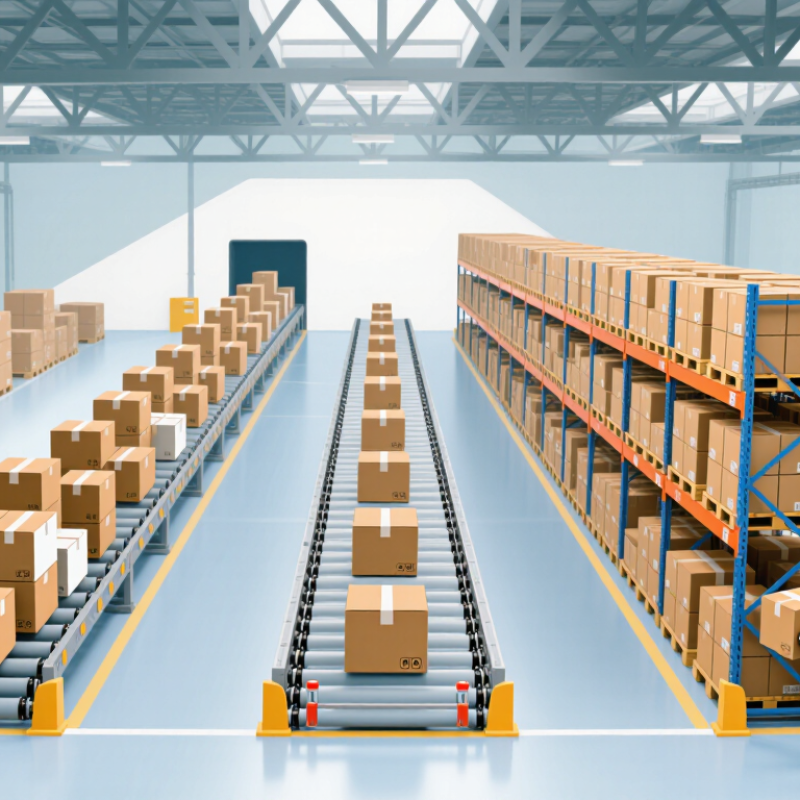
Carton flow storage is a dynamic rack system designed for fast-moving cartons. It uses inclined rollers or wheels to move products by gravity. Workers load cartons from the rear side. Cartons then travel toward the picking face. When one carton is removed, the next carton moves forward. This simple movement supports a first-in, first-out rotation.
The system works best when carton sizes and weights are measured before installation. A suitable lane needs the right width, depth, slope, and roller spacing. Dividers keep cartons aligned and prevent leaning. Clear labels help workers identify items without reaching across the rack. In a busy warehouse, this arrangement can shorten walking routes and make replenishment easier. It also separates picking activity from loading activity.
The design is not perfect. A carton can stop if its bottom is uneven or damaged. Heavy products may move too quickly on steep lanes. Warehouse teams should test sample cartons before approving the layout. Operators need training on safe loading, lane limits, and manual handling. Regular inspections should check rollers, frames, labels, and floor stability. A practical trial often reveals problems that drawings miss.
That is worth remembering. Storage efficiency depends on daily discipline, not hardware alone.
How to Choose Carton Flow Storage in 2026?
Which Inventory Conditions Suit Carton Flow Storage Best?
Carton flow storage fits operations with many cartons, repeatable demand, and frequent case picking. It works best when stock moves through defined lanes instead of random locations. Fast-moving grocery, medical supplies, spare parts, and packaged consumer goods often match this profile. FIFO rotation also helps products with shelf-life limits. Each carton enters from the rear and moves forward by gravity. Pickers face the next unit directly.
The strongest conditions usually include medium-to-high SKU velocity and stable replenishment patterns. WERC’s 2024 DC Measures report shows that leading facilities commonly achieve picking accuracy above 99%. That level requires clear stock presentation and disciplined replenishment. Carton flow can support both. MHI’s 2024 Annual Industry Report found that 55% of supply chain professionals reported difficulty finding qualified workers. Simple, visible picking locations may reduce training pressure.
But the fit is not automatic. Low-volume SKUs may waste valuable flow lanes. Very heavy cartons can create safety and maintenance concerns. Demand spikes can also empty lanes too quickly. That shortcut can fail. Review order frequency, carton dimensions, replenishment labor, and expiry rules before installation. A six-week transaction review is useful. Test real cartons, not empty samples. The result may challenge the original layout.
Choosing carton flow storage starts with real inventory data, not a catalog sketch. Measure carton length, width, height, and weight across several deliveries. Include damaged or slightly swollen boxes. A perfect sample can mislead. Record the fastest-moving stock and its daily demand. Then estimate the number of carton positions required for each product family. Leave working space between lanes, especially where operators replenish from the rear.
Load type affects both safety and picking speed. Small cartons may need narrow rollers and gentle braking. Heavy cases require stronger supports and controlled movement. Irregular packages can twist, stop, or fall between rails. Test them physically. I once saw a lane perform well with standard boxes but jam after a supplier changed packaging. That mistake was avoidable. Check whether products remain stable when stacked, opened, or picked individually.
Layout decisions should follow the walking path. Place high-frequency items near packing or dispatch areas, but protect emergency access and pedestrian visibility. Match lane depth to replenishment routines. Deep lanes hold more stock, yet they can hide old cartons and increase handling time. Review clearances for beams, sprinklers, lights, and lifting equipment. Use a temporary mock-up with tape and empty cartons before installation. It will not reveal everything, but it exposes awkward reaches, blocked aisles, and poor sightlines early.
Choosing carton flow storage in 2026 requires more than comparing prices or shelf capacity. The components must match carton size, product weight, replenishment speed, and operator habits. I have found that adjustable roller tracks often perform better when carton dimensions change frequently. Fixed-width lanes can be cheaper, but they may create empty space or unstable movement.
Examine the upright frames, load beams, rollers, dividers, guide rails, and rear stops as one working system. Rollers should move cartons smoothly without sudden drops. Dividers need enough strength to prevent cartons from leaning into nearby lanes. Rear stops should hold cartons securely while allowing easy picking from the front. Check the frame’s rated capacity at every storage level, not only the total rack rating.
Safety details deserve close attention. End guards, back mesh, aisle clearance, and clear load labels reduce avoidable contact and falling-carton risks. Operators should not reach across neighboring lanes or climb on the structure. A small angle change can improve carton flow, but excessive pitch may cause products to collide. I once preferred steeper lanes for faster movement, yet fragile cartons proved the decision wrong. Testing one loaded lane before full installation is wiser. Inspect rollers, beams, anchors, and labels regularly, because wear often appears before a visible failure. Some layouts still look efficient on paper but feel awkward during real picking.
Choosing carton flow storage in 2026 starts with the installation plan, not the catalogue. Measure carton dimensions, weights, SKU velocity, and replenishment paths. A shelf that fits today’s cartons may fail after a packaging change. Leave clear access for installers, inspections, and emergency movement. Check floor capacity, rack height, lighting, and local safety requirements. Use a scaled layout before equipment arrives. It catches costly mistakes early. Do not assume every aisle supports the same picking rhythm.
During commissioning, label every lane and test real cartons, not empty boxes. Confirm carton travel, divider positions, replenishment access, and ergonomic reach. Operators should practice loading from the rear and picking from the front. Record blocked lanes, damaged cartons, and awkward movements during the first weeks. Small issues become daily losses. A flow rail can be technically correct but operationally frustrating. That part deserves more attention than we often give it.
Plan expansion with spare locations, adjustable lanes, and accessible service zones. Keep future product sizes in the design assumptions. Reserve floor space for added modules, but avoid building unused capacity too early. Review inventory data each quarter and move fast-selling items closer to the pick face. Include maintenance checks for wheels, rollers, frames, and labels. A written inspection routine improves reliability, although busy teams may skip it. That weakness should be addressed through simple ownership, visible records, and practical training.
| Planning Dimension | Recommended 2026 Planning Range | How It Influences System Choice | Installation Requirement | Operating Control | Future-Expansion Provision |
|---|---|---|---|---|---|
| SKU velocity segmentation | Fast-moving: top 10–20% of SKUs; medium-moving: next 30–40%; slow-moving: remaining SKUs | Assign high-velocity items to carton flow lanes closest to picking and replenishment aisles. | Reserve the most accessible bays and verify that lane depth matches the active SKU profile. | Review velocity at least quarterly using picks per SKU, order frequency, and seasonal changes. | Keep 10–15% of the initial bay capacity available for reassignment and SKU growth. |
| Carton and tote dimensions | Record length, width, height, weight, label location, and package compression resistance for every active SKU. | Select roller or wheel pitch, lane width, dividers, and stop design according to the smallest and largest cartons. | Use physical samples or calibrated dimensional data before finalizing beam levels and lane components. | Prevent mixed cartons from sharing a lane when their dimensions create jams or poor label visibility. | Use adjustable dividers and replaceable flow components to accommodate packaging changes. |
| Lane depth and capacity | Common planning depth: approximately 900–2,400 mm; target 2–4 front-to-back carton facings per active SKU where practical. | Deeper lanes increase replenishment capacity but can reduce flexibility and make stock rotation more difficult. | Confirm floor flatness, rack frame alignment, load rating, and clearance for rear replenishment access. | Set minimum and maximum carton quantities by SKU and replenish before the pick face is empty. | Install modular lanes so depth, dividers, and carton stops can be reconfigured without replacing the complete rack. |
| Shelf slope and product movement | Use an adjustable slope, commonly around 3–10 degrees, and validate movement with the actual carton surfaces and weights. | Low-friction cartons may require speed control, braking rollers, or a lower slope to avoid impact damage. | Test full, half-full, and nearly empty lanes during commissioning; confirm cartons stop safely at the pick face. | Inspect rollers, wheels, guides, and carton stops on a scheduled basis and remove damaged packaging promptly. | Specify adjustable brackets and replaceable rollers or wheels rather than fixed, non-serviceable components. |
| Ergonomics and pick-face height | Place the highest-frequency pick faces between approximately 750 and 1,200 mm above the floor when the task permits. | Improves reach, visibility, and picking consistency; reserve upper and lower levels for less frequent or heavier work. | Verify working clearances, step access, lighting, floor condition, and aisle width before installation. | Measure reach-related errors, picking time, awkward postures, and manual-handling incidents. | Leave vertical and horizontal adjustment points for changing product mixes and worker requirements. |
| Aisle and workstation layout | Set aisle width from the largest handling equipment, turning path, pedestrian flow, and local safety requirements; do not rely on a universal minimum. | Manual picking, pallet replenishment, and powered equipment require different clearances and traffic controls. | Mark the full footprint on the floor and conduct a trial route with loaded carts, pallets, and emergency access paths. | Separate replenishment and picking movements where possible and maintain unobstructed egress routes. | Use a grid-based layout that allows additional bays or a parallel module to be added without relocating the main workstation. |
| Replenishment frequency | Plan replenishment around demand variability, order cut-off times, and available labor; fast movers may require multiple replenishments per shift. | Higher replenishment frequency favors wider access, clear rear loading paths, and sufficient reserve stock nearby. | Provide defined staging positions and verify that replenishment equipment can access every lane safely. | Use FIFO lane loading, visible SKU labels, replenishment triggers, and cycle-count procedures. | Reserve space for additional reserve storage or a dedicated replenishment aisle if volume increases. |
| Load rating and structural safety | Calculate total load per shelf, bay, and frame from the heaviest planned cartons plus an approved design margin. | Load rating determines beam levels, decking, frame selection, and whether pallet or carton-flow sections can share a structure. | Install on a suitable floor, anchor where required, display load notices, and complete a competent-person inspection. | Ban climbing and overloading; report impact damage, bent members, missing components, and unstable cartons immediately. | Specify components with documented load ratings and maintain an approved spare-parts list for expansion. |
| Picking performance target | Set a site-specific baseline for lines per labor hour, pick accuracy, replenishment time, and travel distance before installation. | Carton flow is most valuable when it reduces travel and presents products consistently at the picking face. | Run a pilot with representative SKUs and compare results against the existing process under similar demand conditions. | Track productivity, accuracy, stockouts, replenishment touches, and congestion by zone. | Use performance results to determine whether to add lanes, change slotting, or create a second pick module. |
| Technology and data readiness | Maintain accurate SKU master data, barcode standards, location IDs, case quantities, dimensions, and replenishment parameters. | Reliable data supports slotting, dynamic reassignments, scan verification, and future integration with warehouse software. | Plan label positions, scanner sightlines, power or network needs, and workstation interfaces before commissioning. | Use location labels, barcode checks, replenishment alerts, and regular data audits to prevent pick errors. | Adopt standard location naming and open data interfaces so new modules can be added without redesigning the control process. |
| Fire, building, and local compliance | Confirm requirements for sprinkler clearance, rack anchoring, seismic design, aisle access, emergency exits, and inspection frequency. | Compliance conditions may limit storage height, bay arrangement, materials, or location within the facility. | Obtain site approval from the responsible safety, building, fire-protection, and engineering authorities before installation. | Keep inspection records, load notices, damage reports, and corrective-action logs available for review. | Keep future bays outside protected clearances and preserve access to fire equipment and emergency routes. |
| Expansion and lifecycle strategy | Model at least three demand scenarios: current volume, expected growth, and peak or seasonal volume over the planned horizon. | Modular carton flow enables staged investment and reduces disruption compared with a complete one-time rebuild. | Document bay spacing, component specifications, floor anchors, utilities, and installation tolerances for repeatable additions. | Review capacity, SKU changes, damage rates, and labor productivity every six to twelve months. | Reserve approximately 10–20% of the planned layout or floor footprint where growth uncertainty is significant. |
It is a rack system for fast-moving cartons. Inclined rollers move cartons toward the picking face by gravity. One carton advances when another is removed. Simple movement.
Workers load cartons from the rear and pick them from the front. This arrangement supports first-in, first-out rotation. Older cartons usually move forward first.
Measure carton width, depth, height, weight, and packaging condition. Also review SKU speed and replenishment paths. A damaged bottom can stop movement.
Examine frames, beams, rollers, dividers, guide rails, and rear stops together. Adjustable tracks help when carton sizes change often. Fixed lanes may waste space.
Keep aisles clear and respect every lane’s load limit. Use end guards, back mesh, labels, and stable anchors. Never climb the rack.
Real cartons reveal problems that drawings and empty boxes miss. Test travel speed, collisions, leaning, reach distance, and replenishment access. Paper plans can mislead.
Use a scaled layout and check floor capacity, lighting, rack height, and service access. Label every lane clearly. Practice rear loading and front picking.
Leave space for added modules, service access, and changing carton sizes. Use adjustable lanes when possible. Unused capacity still costs money.
Inspect rollers, wheels, beams, frames, anchors, labels, and floor stability regularly. Record blocked lanes and damaged cartons. Busy teams may skip checks, so assign visible ownership. That weakness matters.
Choosing Carton Flow Storage in 2026 requires a clear understanding of how it supports organized, efficient order fulfillment. This system uses inclined lanes and gravity-assisted rollers or wheels to move cartons from the loading side to the picking side, helping maintain product visibility and promote first-in, first-out inventory rotation. It is especially suitable for operations handling small to medium-sized cartons, frequent picking, high SKU variety, and goods with predictable turnover.
Before selecting a solution, evaluate required capacity, carton dimensions, weight ranges, replenishment methods, and available warehouse space. Consider how the flow racks will fit into the overall layout, including access aisles, picking zones, and replenishment paths. Compare components such as frames, lanes, dividers, rollers, brakes, and safety guards for durability and ease of adjustment. A successful plan should also cover installation sequencing, operator training, routine inspections, and future expansion. Choosing modular Carton Flow Storage can help warehouses adapt to changing inventory volumes while maintaining safe, consistent, and efficient operations.

Jracking