What Is Drive-in Storage and How Does It Work?

Time:2026-09-18 Author:Aria
0%

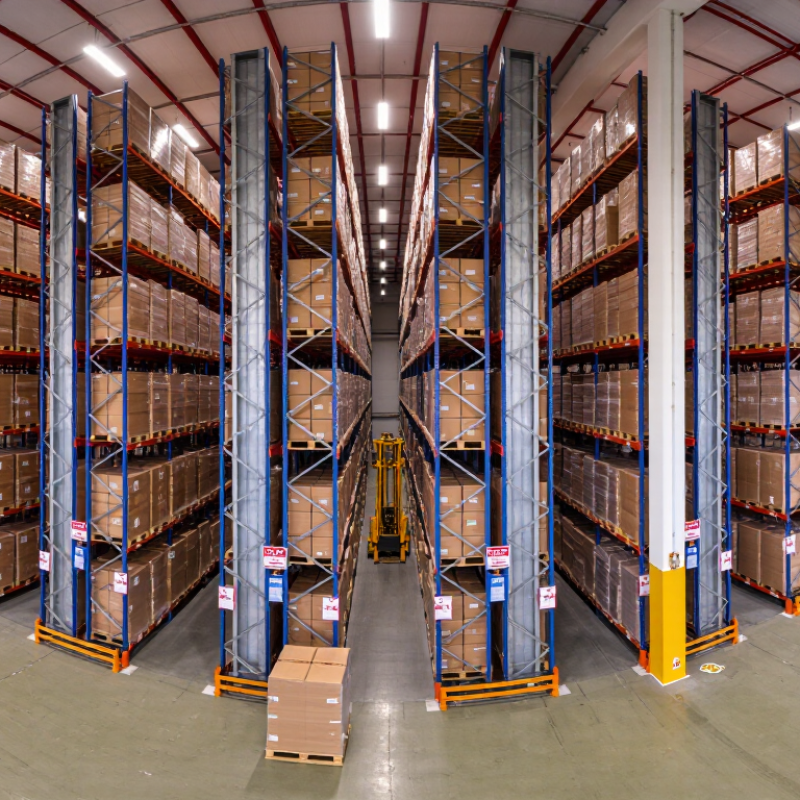
Drive-in Storage is a high-density pallet racking system designed for warehouses holding large quantities of similar products. Instead of placing an aisle between every rack row, forklifts enter the rack structure and travel along supported rails. Pallets are stored from the back toward the front, often using a last-in, first-out flow. This design can increase usable storage capacity, especially where floor space is expensive.

The MHI 2024 Annual Industry Report identifies space utilization, labor efficiency, and operational resilience as continuing warehouse priorities. Drive-in Storage addresses the first priority effectively, but it requires disciplined planning. A forklift operator may enter a dark, narrow lane, collect the front pallet, and reverse carefully without touching the uprights. Small mistakes can damage rails or reduce stability. That detail matters.

The Warehouse Education and Research Council’s 2024 DC Measures report also emphasizes measurable warehouse performance, including storage efficiency and order-fulfillment control. These benchmarks support a practical question: does higher density improve the entire operation, or only the storage map? Drive-in Storage usually suits stable inventories, seasonal goods, and products managed by batch. It is less suitable for fast-moving items requiring direct access to every pallet.

Rack configuration, pallet condition, load weight, forklift dimensions, and fire-protection requirements must be reviewed together. The Rack Manufacturers Institute’s technical guidance reinforces the need for engineered rack design, inspections, and documented operating procedures. It is not a universal answer. The trade-off is easy to underestimate. A dense rack can save space, yet poor rotation discipline may create hidden handling costs. Understanding how Drive-in Storage works helps managers compare capacity gains with safety, accessibility, and daily workflow demands.
What Is Drive-in Storage and How Does It Work?

Definition and Core Purpose of Drive-in Storage

Drive-in storage is a high-density pallet racking system built around deep storage lanes. Forklifts enter these lanes to place or retrieve pallets. Steel rails support each pallet position, allowing the rack structure to hold several pallets behind one another. Unlike selective racking, this design uses fewer access aisles and more vertical warehouse space.

Its core purpose is to store large quantities of similar goods while reducing unused floor area. A forklift normally loads pallets from the front and removes the deepest pallet last. This creates a last-in, first-out flow. It works well for products with long, stable shelf lives, such as seasonal materials or uniform packaged goods. Space matters. Every aisle removed can create useful capacity.

In practical warehouse planning, drive-in storage requires careful product and equipment analysis. Pallet dimensions, load weight, rack height, and forklift clearance must match precisely. Operators need clear visibility when entering a lane, especially near the rear stops. Regular inspections should check rails, uprights, guards, and signs of impact damage. A damaged component can affect the entire lane.

The system is efficient, but not perfect. It limits direct access to individual pallets and may slow order picking when products vary frequently. That trade-off deserves attention. In my experience, the best layout balances capacity with retrieval speed, stock rotation, maintenance access, and worker safety. A dense rack is only useful when people can operate it reliably.

Key Components and Layout of a Drive-in Storage System

What Is Drive-in Storage and How Does It Work?

A drive-in storage system uses deep lanes to hold multiple pallets behind one another. A forklift enters the lane and places pallets on horizontal support rails. It also retrieves them, usually from the same access point. This design reduces open aisles and increases storage density. It works best when storing large quantities of similar products with limited stock rotation.

The main components include upright frames, load rails, guide rails, entry guides, and column protectors. Upright frames carry vertical loads, while rails support pallets at different heights. Guide rails help position the forklift and reduce contact with the structure. Column protectors add resistance near busy entry points. A practical layout normally places heavy or frequently accessed pallets near the front. Deeper lanes can store reserve inventory.

Clear height, pallet dimensions, forklift turning space, and floor condition must be checked before installation. Small errors matter here. A slightly incorrect rail height can create unstable loading or wasted space.

Tips: Keep each lane dedicated to compatible products and pallet sizes. Mark maximum load limits clearly. Inspect rails, uprights, and floor anchors regularly. Operators should enter slowly and keep forks level. In real warehouses, layouts often need adjustment after daily use reveals blind spots. That is not failure. It is useful evidence for improving aisle width, lighting, or lane depth. A qualified storage professional should verify the final design and inspection plan.

How Vehicles Enter, Load, and Exit the Storage Area

Drive-in storage is a high-density racking system designed for forklifts to enter the storage lanes. Unlike standard shelving, it has fewer access aisles and uses the available floor space more efficiently. Pallets are placed on rails at different depths, creating a tunnel-like arrangement.

A forklift enters the open end of a lane and moves carefully toward the rear. It lifts each pallet, travels slowly, and positions the load on supporting rails. The operator then reverses along the same path. Loading usually starts at the back and continues toward the entrance. During retrieval, the front pallet leaves first, so this system follows a last-in, first-out pattern. The vehicle must keep its forks level and avoid touching the rack frame. Small alignment errors can damage both the load and the structure.

Tips: Keep lanes clean, mark entry points clearly, and check rack capacity before loading. Drivers should use low speeds and confirm clearance at every level. Regular inspections matter. In real facilities, the last pallet is not always the easiest to remove. Mixed products, uneven packaging, or a rushed loading decision can reduce access. That weakness is easy to overlook. Operators should plan lane assignments carefully and leave enough room for safe turning and reversing. Lights, floor guides, and visible warning signs also help vehicles enter and exit with fewer mistakes.

Storage Procedures, Capacity, and Inventory Access

Drive-in storage uses deep pallet lanes supported by rails, allowing forklifts to enter the rack structure. Pallets are stored behind one another, rather than beside separate aisles. This design removes many walking aisles and increases usable capacity. Space matters. It works best when a warehouse stores large quantities of the same product. In practice, operators should check pallet dimensions, load weights, and forklift clearance before installation.

Storage procedures usually follow a last-in, first-out pattern. The newest pallet enters the lane after older pallets are placed near the entrance. Workers should load each lane evenly and confirm that pallets sit fully on both support rails. A visible location label helps reduce picking errors. Daily inspections should look for bent rails, damaged pallets, loose goods, and uneven loads. Small oversights can become expensive problems.

Inventory access is the main trade-off. A forklift can reach the rear pallet, but front pallets must often be removed first. This makes drive-in storage less suitable for products with frequent rotation or strict first-in, first-out requirements. Capacity calculations should include rack height, aisle width, fire protection space, and safe forklift movement. Measuring only floor area gives an optimistic result. A digital inventory record can show lane positions, batch details, and remaining quantities, although staff still need to verify physical stock. Mistakes happen. Clear procedures and regular cycle counts keep them manageable.

What Is Drive-in Storage and How Does It Work? - Storage Procedures, Capacity, and Inventory Access

Data Dimension Drive-in Storage Information Operational Consideration
System definition A high-density pallet-racking system in which forklifts enter storage lanes to load and retrieve pallets. The rack structure must provide sufficient clearance for the selected forklift and pallet load.
Loading procedure The forklift enters the lane, places the pallet on the supporting rails, and withdraws carefully. Loads should be positioned evenly and must not obstruct the lane or contact the rack frame.
Retrieval procedure The forklift enters the lane, collects the accessible pallet, and reverses out at a controlled speed. Operators need clear visibility, adequate maneuvering room, and a stable floor surface.
Typical inventory rotation Last-in, first-out (LIFO) is the usual operating pattern because pallets are stored in depth from one access face. LIFO is generally unsuitable for products that require strict first-in, first-out rotation.
Access configuration Drive-in racks normally have one operating face. Drive-through variants allow forklift access from both ends. Drive-through layouts can support more flexible loading and unloading, but they may require additional aisle space.
Storage density High density because multiple pallets share each lane and fewer individual access aisles are required. Actual density depends on pallet dimensions, lane depth, rack height, building columns, fire protection, and required clearances.
Lane capacity A lane can hold several pallets in depth; the exact quantity is calculated from usable lane length and pallet depth. Do not calculate capacity from nominal dimensions alone; include pallet overhang, rack tolerances, and handling clearances.
Overall capacity calculation Approximate pallet capacity = number of lanes × pallet positions per lane × usable storage levels. The safe working load of beams, rails, uprights, and floor must never be exceeded.
Best product profile Large quantities of the same or similar product, with relatively low SKU variety and predictable demand. It is most effective when full pallet loads are moved in batches rather than picked individually.
SKU suitability Works best when each lane is dedicated to one SKU, product batch, or compatible product group. Mixing incompatible loads in one lane can make stock identification and retrieval more difficult.
Forklift requirement The truck must be rated for the load and capable of entering the lane while lifting and positioning pallets safely. Check truck width, lift height, turning radius, mast configuration, and load capacity before installation.
Inventory visibility Only the accessible end of a lane is immediately visible during normal operation. Use location labels, barcode records, cycle counts, and lane-level inventory controls to maintain accuracy.
Space utilization More floor area can be assigned to storage because conventional aisle requirements are reduced. Reduced aisle space must be balanced against slower access and more complex forklift maneuvering.
Handling speed Fast for repeated full-pallet movements when the required pallet is at the accessible end of the lane. Retrieving a pallet located behind other pallets may require temporary relocation of front pallets.
Product accessibility Selective access to every pallet is limited compared with conventional selective pallet racking. Use a more selective system when frequent access to many individual SKUs is required.
Safety controls Important controls include speed limits, trained operators, rack protection, load inspections, and unobstructed lanes. Damaged components or unstable pallets should be isolated and assessed before continued use.
Primary advantages and limitations Advantages: high storage density, efficient use of floor space, and strong suitability for uniform bulk inventory. Limitations: restricted pallet selectivity, LIFO operation, and greater dependence on forklift skill. Select the system after comparing product rotation, SKU variety, access frequency, building constraints, and safety requirements.

Advantages, Limitations, and Suitable Applications

Drive-in storage is a high-density pallet system where forklifts enter deep lanes instead of using separate aisles. Rails support each pallet position, while the last pallet loaded is usually the first removed. This layout can reduce aisle space significantly. The 2024 MHI Annual Industry Report found that 55% of supply-chain leaders planned to increase technology and innovation investment, but dense storage still depends heavily on disciplined operations. In practice, drive-in storage can improve cubic utilization when many pallets contain the same product, lot, or seasonal item.

The advantages are clear in cold rooms, beverage warehouses, and bulk storage areas. Fewer aisles mean more usable floor volume. It also reduces construction pressure when land is expensive. Yet the system has limitations. Product rotation is slower, forklift access is restricted, and a damaged rail can interrupt an entire lane. Mixed stock creates confusion quickly. It is not a universal answer. The Rack Manufacturers Institute’s ANSI MH16.1 guidance emphasizes engineered design, rated capacities, and protection against impact. Operators should also verify load dimensions, pallet quality, vehicle clearance, and fire-protection requirements before installation. The U.S. Occupational Safety and Health Administration repeatedly identifies struck-by hazards as a major workplace risk; drive-in layouts can increase that risk without strict speed control and inspection routines. One overlooked weakness is human behavior. Workers may place a convenient pallet in the wrong lane, creating hidden inventory errors. This storage method works best for stable, predictable inventory—not fast-moving products with many stock-keeping units.

What Is Drive-in Storage and How Does It Work?

Drive-in racking allows forklifts to enter storage lanes and place pallets on supported rails. Because it uses fewer aisles than selective pallet racking, it can provide high storage density, but access to individual pallets is limited.

How to read the chart: Drive-in storage commonly supports multiple pallets in depth, which improves space utilization compared with selective pallet rack. Its main limitation is reduced selectivity: forklifts generally access pallets from the front of each lane, making it most suitable for large quantities of the same or similar products, stable inventory, and last-in, first-out (LIFO) handling.

Actual storage depth depends on building height, pallet dimensions, load weight, forklift specifications, fire-protection requirements, and the rack design. The ranges shown are typical industry design ranges rather than fixed limits.

FAQS

What is drive-in storage?

Drive-in storage is a deep-lane pallet racking system. Forklifts enter the lanes to place or retrieve pallets. Steel rails support pallets at different depths.

Why do warehouses use drive-in storage?

It stores many similar pallets in a compact area. Fewer aisles leave more floor space for storage. Space matters.

How does the loading process work?

A forklift enters the open lane and moves slowly toward the rear. Loading usually begins at the deepest position. The operator places pallets on supporting rails, then reverses carefully.

How are pallets retrieved from the rack?

The front pallet is removed first. Deeper pallets remain behind it. This creates a last-in, first-out flow.

Which products suit this storage system?

It suits uniform goods with long, stable shelf lives. Seasonal materials can work well. Frequently changing products may create retrieval problems.

What must be checked before installation?

Pallet size, load weight, rack height, and forklift clearance must match. The lane depth also needs careful planning. A small mismatch can cause trouble.

How can forklift operators work safely inside the lanes?

Drivers should use low speeds and keep forks level. They should confirm clearance at every rack level. Floor guides, lights, and clear warning signs can help.

What maintenance checks are important?

Inspect rails, uprights, guards, and rear stops regularly. Look for impact marks or bent components. One damaged part may affect the entire lane.

What are the main limitations of drive-in storage?

It limits direct access to individual pallets. Order picking may slow when products change often. A dense rack is not always the fastest rack.

How can a warehouse balance capacity and retrieval speed?

Assign lanes according to product type and movement frequency. Keep lanes clean and entry points visible. Leave enough room for reversing and turning. Planning can still miss real operating problems.

Conclusion

Drive-in Storage is a high-density warehouse system designed to store large quantities of similar goods while making efficient use of floor and vertical space. Instead of relying on individual access aisles for every pallet, it uses deep storage lanes supported by upright frames, rails, and protective structures. Forklifts enter these lanes directly to place or retrieve pallets, allowing the system to reduce unused aisle space and increase overall capacity.

In a typical operation, a vehicle enters the designated lane, positions the load at the required depth, and exits carefully after completing the movement. Storage procedures generally follow a controlled sequence, such as loading from the back and retrieving from the front, so inventory access remains organized. Although Drive-in Storage offers excellent density and is well suited to high-volume, low-variety inventory, it provides less selectivity than systems with individual pallet access. It is most appropriate for stable, uniform goods that can be managed in batches and do not require frequent item-by-item retrieval.

Aria

Aria

Aria is a dedicated marketing professional with a deep passion for innovative strategies and a keen understanding of our company's product offerings. With a wealth of experience in the industry, Aria excels at crafting engaging content that highlights the unique features and benefits of our......