Choosing Impact Racks for global sourcing requires more than comparing prices in supplier catalogs. These systems must match pallet dimensions, load weights, forklift movements, warehouse temperatures, and local installation conditions. A rack designed for a dry warehouse may perform poorly near coastal air, where corrosion develops around joints and base plates. Small details matter.
Begin with verified specifications. Confirm beam capacity, upright thickness, bracing design, anchoring methods, surface treatment, and inspection procedures. Ask suppliers for engineering drawings, load tables, material certificates, and test documentation. Independent audits can strengthen confidence, especially when factories use different quality systems. Samples or pilot installations are also valuable. They reveal packaging damage, assembly gaps, and unclear instructions before a large shipment arrives.
Global sourcing adds further risks. Lead times, export packaging, spare parts, communication, and after-sales support can affect the true cost. A low quotation may hide expensive replacements or difficult installation. Review supplier experience with similar warehouses, not just their product photographs. Request references where possible. Check every measurement twice.
Still, no checklist is perfect. Site conditions can change after purchase, and translated specifications may create confusion. A practical decision should combine engineering review, supplier evidence, and real operating needs. Impact Racks should support safe access, efficient storage, and long-term maintenance. The best choice is not always the cheapest or most sophisticated option. It is the one that remains dependable when pallets are heavy, aisles are busy, and assumptions meet reality.
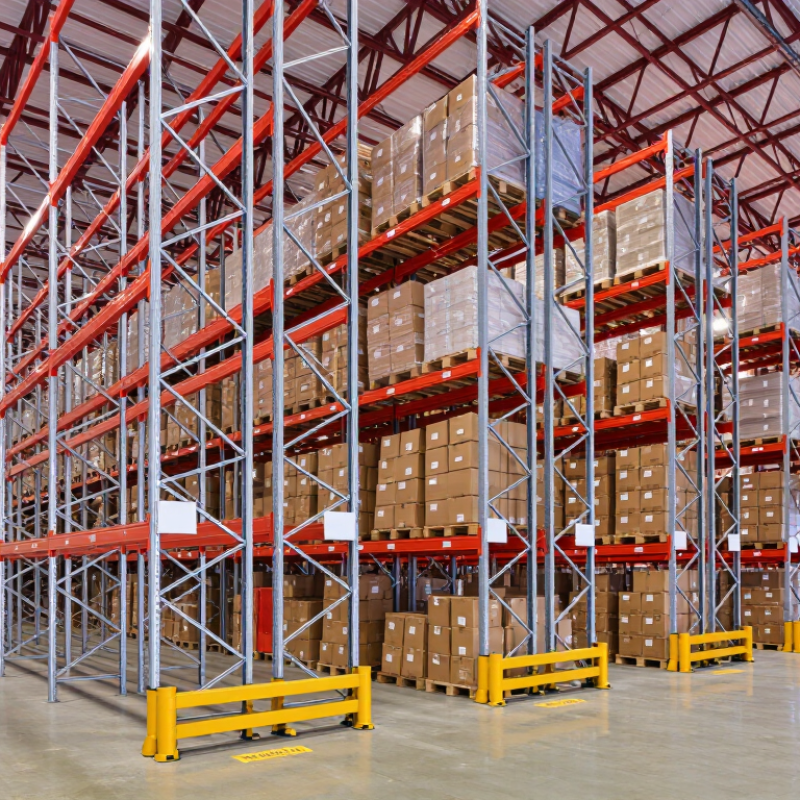
How to Choose Impact Racks for Global Sourcing?
Classify Impact Rack Types by Use, Load, and 42–48-Inch Pallet Depths
Global sourcing starts with pallet facts, not catalog images. Measure pallet depth, width, weight, and load stability before selecting impact racks. A 42-inch pallet may fit standard selective storage, while a 48-inch pallet needs deeper beams and safer clearance. Small differences matter.
Selective racks suit mixed SKUs and frequent forklift access. Drive-in racks offer higher density for uniform loads, but reduce direct access. Push-back systems support multiple pallets per lane and faster rotation. Pallet-flow racks work well for first-in, first-out operations, especially where expiration control matters. The 2024 MHI Annual Industry Report states that 55% of supply-chain leaders increased technology investment. Rack selection should support that operational shift, not block it.
Load capacity needs engineering review. ANSI/RMI MH16.1 guidance requires designers to consider beam capacity, upright loads, seismic conditions, and forklift impact. OSHA 29 CFR 1910.176(b) also requires stored materials to remain stable and secure. Leave practical clearance around 42–48-inch pallets, including packaging overhang. A neat spreadsheet can still mislead. I have seen teams specify maximum weight, then ignore uneven loading. That mistake changes rack performance. Inspect anchors, guards, beams, and floor conditions before purchase. Ask suppliers for tested capacities, drawings, and inspection procedures. Cheap capacity claims deserve skepticism.
How to Choose Impact Racks for Global Sourcing?
For global sourcing, verify beam capacity before comparing price or finish. ANSI/RMI MH16.1 provides engineering criteria for industrial steel storage racks, including member strength, stability, and connection performance. A 2,500-pound pallet is not a complete design input. Confirm whether the rating applies per beam pair, per level, or to the entire upright frame. Ask suppliers for load tables, steel grades, beam spans, and deflection limits.
Use realistic warehouse conditions. A 5,000-pound load creates different demands when pallets are uneven, damaged, or placed with a forklift. Check pallet dimensions, support conditions, rack height, seismic exposure, and aisle traffic. OSHA 29 CFR 1910.176(b) requires stored materials to remain secure against sliding or collapse. The U.S. Bureau of Labor Statistics recorded 1,032 fatal injuries in transportation and material-moving occupations in 2023, showing why handling controls deserve serious attention.
Small details matter. Inspect beam connectors, upright anchors, floor flatness, and impact damage during a site visit. Photograph every questionable connection. Then compare the findings with the supplier’s calculations. A spreadsheet helps, but it is not the whole answer. One uncomfortable gap is common: buyers often request a “5,000-pound rack” without defining pallet placement or load distribution. Require capacity plaques, installation instructions, and inspection guidance aligned with ANSI/RMI MH16.1. Local structural review may still be necessary. Load assumptions can be wrong. Recheck them before ordering.
Verify the beam capacity against ANSI/RMI MH16.1 requirements and the intended 2,500–5,000-pound level load range. The chart shows the total load supported by one beam level and the corresponding load per pallet when two pallets share the level.
Calculation basis: Load per pallet = total beam-level load ÷ 2 pallets. Actual rack selection must be confirmed using the engineered beam rating, frame configuration, impact conditions, pallet position, and applicable ANSI/RMI MH16.1 requirements.
Choosing impact racks for global sourcing requires more than comparing steel thickness or load capacity. OSHA 1910.176 requires stored materials to remain stable and avoid hazards, while aisles must stay clear and usable. The standard does not certify a rack model. It evaluates safe workplace conditions. Ask suppliers for load calculations, installation instructions, beam-lock details, and evidence of tested impact protection.
EN 15635 adds practical control. It recommends regular visual inspections, immediate checks after serious impact, and at least one expert inspection every 12 months. A competent person should record bent uprights, displaced beams, missing safety pins, and overloaded bays. Small damage matters. A damaged upright can look cosmetic but reduce structural capacity. Use clearly visible load plaques and floor protection at forklift approaches.
Industry investment also signals the need for disciplined selection. The 2024 MHI Annual Industry Report found that 55% of supply-chain professionals increased technology and innovation investment. More automation can increase rack traffic and impact exposure. Therefore, global buyers should match rack design with forklift speed, pallet dimensions, seismic conditions, and local installation practice. One weakness remains: compliance documents may describe ideal installation, not real warehouse behavior. Audit the finished racks in operation, not only the supplier’s paperwork.
| Evaluation Dimension | OSHA 1910.176 Reference | EN 15635 Reference | What to Check When Sourcing Impact Racks | Recommended Evidence |
|---|---|---|---|---|
| Regulatory scope | A general workplace rule covering the safe storage and handling of materials, including stable stacking and unobstructed passageways. | A European standard for the application and maintenance of adjustable pallet racking and related steel static storage systems. | Confirm which requirements apply in the country of installation and avoid treating one standard as a universal substitute for local law. | Country-specific compliance matrix, installation location, and written legal or engineering review. |
| Load capacity | Materials must be stored, handled, and stacked in a manner that does not create a hazard. | Safe use depends on the rack’s designed load data, configuration, beam levels, unit loads, and operating conditions. | Verify rated bay load, beam-pair load, upright capacity, pallet type, load dimensions, and load-center assumptions. Never exceed the approved configuration. | Signed structural calculations, load plaques, design drawings, and test or assessment records where applicable. |
| Impact resistance | The rule requires safe storage and handling but does not prescribe one universal rack-guard design or impact rating. | Requires operating procedures and protection measures appropriate to foreseeable damage risks during use. | Specify end-of-aisle guards, upright protectors, barrier systems, column protection, and replacement criteria based on forklift traffic and site layout. | Protection layout, impact-risk assessment, guard dimensions, anchoring details, and maintenance instructions. |
| Aisles and access | Permanent aisles must provide safe clearance for people and vehicles, and aisles used by material-handling equipment must be kept clear. | Rack operation should follow the designed clearances, handling equipment requirements, and site operating procedures. | Measure forklift turning space, pedestrian routes, emergency access, rack-to-rack clearance, and end-of-aisle visibility before finalizing dimensions. | Scaled warehouse plan, traffic-flow drawing, equipment turning-radius data, and site acceptance record. |
| Stability and anchoring | Stored materials must remain stable and secure against sliding, collapse, or other hazards. | The rack must be suitable for the floor, configuration, loads, and use conditions, with installation and anchoring completed according to the design. | Check base plates, anchor type, concrete condition, floor flatness, seismic or wind considerations where relevant, and compatibility with the approved design. | Foundation information, anchor specifications, installation torque records, and as-built inspection report. |
| Pallet and load-unit compatibility | Materials must be stored in a way that prevents hazards to employees and workplace operations. | Safe operation depends on compatible unit loads, beam supports, clearances, and rack configuration. | Confirm pallet quality, entry direction, pallet overhang, beam seating, load containment, and whether damaged pallets are removed from service. | Pallet specification, load-unit drawings, sample loading trial, and written pallet acceptance criteria. |
| Beam and component security | Materials and equipment must be arranged to prevent hazards arising from movement or collapse. | Components should be correctly installed, secured, and maintained in accordance with the rack design and manufacturer’s instructions. | Verify locking devices, beam connectors, safety pins, bracing, wire decking or supports, and protection against accidental beam displacement. | Assembly manual, component checklist, installation photographs, and pre-use inspection form. |
| Inspection program | Employers must maintain safe working conditions and correct hazardous conditions identified in the workplace. | Requires regular systematic inspections, with damage evaluation and corrective action based on the severity of the risk. | Set daily operator checks, routine management inspections, formal expert inspections, damage reporting, quarantine, repair, and reinspection procedures. | Inspection schedule, defect classification guide, inspection logs, repair records, and staff training records. |
| Damage response | Unsafe conditions must be addressed so that employees are not exposed to preventable material-handling hazards. | Damaged components should be immediately identified, assessed, unloaded or isolated when necessary, and repaired or replaced before safe reuse. | Require a visible red-tag or quarantine process, clear escalation rules, spare-component availability, and approval before returning a rack to service. | Damage report template, quarantine procedure, repair approval form, and replacement-part list. |
| Safety signage and load notices | Work areas and material-handling arrangements must be maintained so that hazards are controlled and safe access is preserved. | Rack users should have access to relevant load, configuration, inspection, and operating information. | Provide durable load plaques showing allowable loads, beam levels, configuration limits, and any restrictions on use. | Approved load plaque artwork, multilingual safety instructions, and signage installation checklist. |
| Installation and commissioning | The workplace must be arranged and maintained to protect employees from hazards during storage and handling. | Installation should follow the design, manufacturer’s instructions, and applicable operational safety procedures. | Use qualified installers, verify plumbness and anchoring, check component identity, and complete a documented handover before loading. | Installer qualifications, method statement, inspection checklist, commissioning certificate, and as-built drawings. |
| Forklift and pedestrian interaction | Aisles and passageways must provide safe clearance for employees and material-handling equipment. | Safe operation requires suitable equipment, trained operators, controlled traffic, and procedures that reduce rack-impact risk. | Separate pedestrians where practicable, mark travel lanes, control speed, improve visibility, and protect rack ends in high-traffic areas. | Traffic-management plan, operator training records, floor-marking plan, and forklift risk assessment. |
| Material quality and traceability | Safe storage depends on preventing structural or handling hazards in the workplace. | Components should match the approved design and be identifiable for inspection, maintenance, and replacement. | Request steel grade information, coating specification, dimensional tolerances, weld or forming quality controls, and component traceability. | Material certificates, quality-control plan, dimensional inspection report, batch traceability, and coating records. |
| Documentation for global sourcing | Compliance is primarily demonstrated through safe workplace controls, hazard correction, and documented employer practices. | Compliance relies on correct design, installation, use, inspection, maintenance, and documented operating procedures. | Include drawings, calculations, manuals, installation instructions, inspection forms, spare-part data, and translated safety information in the purchase package. | Controlled technical file, revision history, country-of-installation requirements, and acceptance documentation. |
How to Choose Impact Racks for Global Sourcing?
Compare Landed Costs Across Freight, Duties, Lead Times, and 10–15% Reserves
Choosing impact racks from overseas requires more than comparing unit prices. I examine the landed cost for every shipment, including factory pricing, inland transport, ocean or air freight, insurance, duties, customs fees, and final delivery. A rack priced at $85 may exceed $125 after clearance and handling charges.
Freight often changes the decision. A full container can reduce the cost per rack, while a small shipment may face expensive consolidation fees. I request quotes using the same delivery terms and packaging details. Otherwise, the comparison becomes unreliable. Confirm rack dimensions, shipping weight, pallet count, and stackability before accepting a quotation.
Duty rates depend on product classification, materials, origin, and local customs rules. These details need professional verification. Lead time also carries a cost. A twelve-week delay may require temporary storage, substitute equipment, or rushed freight. I calculate both the expected landed cost and a realistic 10–15% reserve for currency movement, port delays, inspections, damage, or revised fees.
The reserve is not waste.
It is risk control.
My own estimates are sometimes too optimistic, especially when suppliers provide incomplete packing data. That mistake is useful, but expensive. For a stronger decision, compare at least three sourcing scenarios: standard freight, expedited freight, and delayed delivery with buffer stock. Then test whether the rack still meets load ratings, corrosion requirements, and installation conditions after the financial assumptions change.
Choosing impact racks for global sourcing starts with supplier qualification, not catalog photos. During factory audits, inspect steel certificates, weld consistency, beam-hole accuracy, and load-test records. Watch a live production run. This reveals habits that paperwork can hide. Clean floors help, but process control matters more. Ask for calibration dates, inspection sampling plans, and corrective-action evidence. One missed detail can become a damaged pallet or a delayed installation.
Set a 98% on-time delivery target in the supplier agreement, measured against confirmed shipment dates. Define what “on time” means. Include production completion, port handoff, and document release. Request weekly updates while orders are active. A supplier that reports problems early is more dependable than one promising perfection. Still, 98% is not a guarantee. Weather, congestion, and inaccurate forecasts can disrupt schedules. My factory audits have shown that optimistic capacity figures sometimes deserve a second review.
The warranty should define coverage, exclusions, response times, and replacement responsibilities. It should address frame deformation, weld failure, coating defects, and missing components. Ask how claims are investigated and whether spare parts are available near your market. Keep photos, batch numbers, inspection reports, and installation records. These details support fair decisions when damage appears months later. Test a sample rack before full approval. It costs time. It can prevent a costly mistake. A supplier may pass an audit and still need closer supervision during scale-up.
Capacity affects safety, layout, and usable storage. A low price means little if the beam cannot support the planned load.
No. Confirm whether the rating applies per beam pair, storage level, or upright frame. Load placement changes the calculation.
Request load tables, steel grades, beam spans, deflection limits, and connection details. Also request installation instructions and inspection guidance.
Check pallet size, support points, rack height, floor flatness, and seismic exposure. Consider uneven or damaged pallets.Forklift placement matters.
Inspect beam connectors, upright anchors, floor conditions, and impact damage. Photograph questionable connections before ordering or repairing equipment.
Include factory pricing, inland transport, freight, insurance, duties, customs fees, and final delivery. A rack priced at $85 may exceed $125 after handling.
Compare quotes using identical delivery terms. Confirm dimensions, shipping weight, pallet count, and stackability. Otherwise, the comparison may be misleading.
Yes. Keep a realistic 10–15% reserve for currency changes, delays, inspections, damage, and revised fees. The reserve is risk control.
Compare standard freight, expedited freight, and delayed delivery with buffer stock. Then retest capacity, corrosion needs, and installation conditions.
Challenge pallet placement, load distribution, customs costs, and delivery timing. My estimate may still miss a fee. Recheck everything.
Choosing the right Impact Racks for global sourcing requires a structured evaluation of application, capacity, safety, and total cost. Start by classifying rack types according to warehouse use, product weight, handling equipment, and pallet dimensions, with special attention to common 42–48-inch pallet depths. Confirm that beam and frame capacities match expected loads, typically between 2,500 and 5,000 pounds, and verify designs against ANSI/RMI MH16.1 requirements. Safety should also be reviewed under applicable standards, including OSHA 1910.176 and EN 15635, to support safe installation, loading, and operation.
A complete sourcing decision should compare landed costs rather than unit price alone. Include freight, duties, insurance, lead times, installation considerations, and a 10–15% reserve for unexpected expenses. Supplier qualification is equally important: conduct factory audits, review quality-control procedures, assess the ability to achieve approximately 98% on-time delivery, and confirm warranty terms. This approach helps buyers balance performance, compliance, reliability, and long-term value across international supply chains.

Jracking