China Top 10 Storage Solutions Suppliers for Global Buyers

Time:2026-11-16 Author:Amelia
0%

China Top 10 Storage Solutions Suppliers for Global Buyers is a practical starting point, not a universal ranking. The right partner depends on product dimensions, warehouse layout, throughput, and after-sales support. A pallet rack that suits a high-bay facility may waste space in a small distribution center.

China’s logistics sector offers significant scale. The China Federation of Logistics and Purchasing reported total social logistics costs of RMB 18.2 trillion in 2023, equal to 14.4% of GDP. The World Bank’s 2023 Logistics Performance Index ranked China 19th among 139 economies. These indicators describe the broader logistics environment, not the performance of individual storage suppliers. Buyers still need to verify specifications, references, and service capacity.

Supply-chain scholar Martin Christopher writes: “Supply chain management is the management of upstream and downstream relationships with suppliers and customers to deliver superior customer value at less cost to the supply chain as a whole.” That principle applies to Storage Solutions: equipment must fit the operation, not just the quotation. This guide compares ten Chinese suppliers for global buyers, with attention to product range, customization, export experience, and communication. Details matter. A drawing, a load rating, and a clear installation plan can prevent costly surprises. No shortlist replaces factory checks or sample validation. And, candidly, supplier claims can be difficult to compare when testing methods differ.
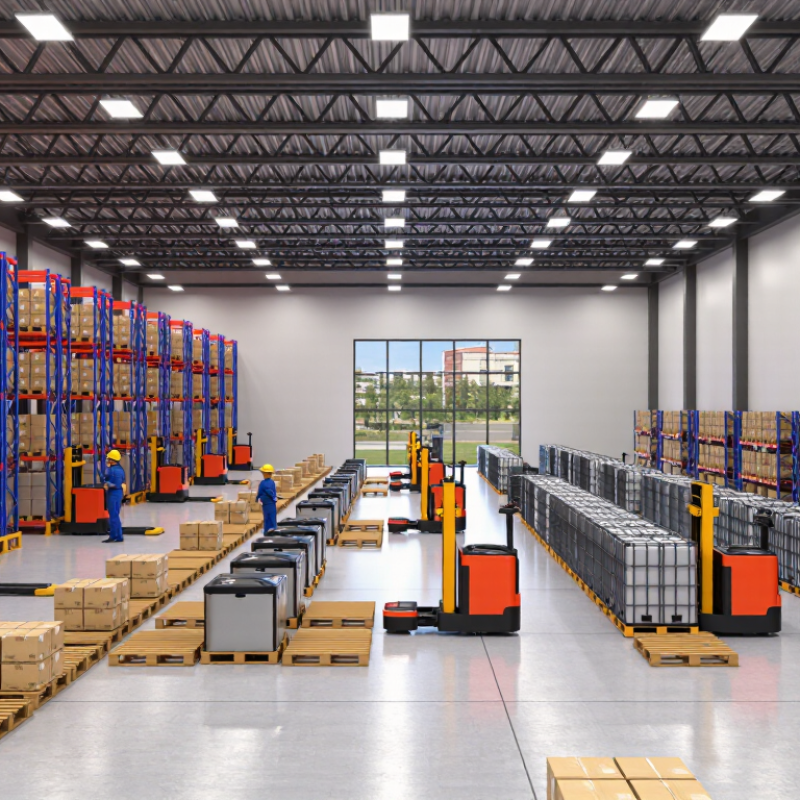
China Top 10 Storage Solutions Suppliers for Global Buyers

Defining Warehouse Storage Solutions: Racking, Mezzanines, and AS/RS

Warehouse storage solutions should match inventory shape, order velocity, building height, and handling methods. Selective pallet racking offers direct access to each pallet, while drive-in systems trade some selectivity for denser storage. Mezzanines add usable floor area for picking or light assembly, but their columns, stairs, and load limits need careful planning. Automated storage and retrieval systems (AS/RS) can improve space use and repeatability, yet depend on suitable layouts, software, and steady throughput. Clearances matter.

MHI’s 2024 Annual Industry Report, prepared with Deloitte, found that 88% of surveyed supply-chain professionals expected technology investment to increase over the following five years. That signals growing interest, not a guarantee that automation suits every warehouse. Buyers should compare storage options using real SKU dimensions, peak order volumes, pallet weights, and expansion plans. A drawing may look efficient while creating awkward replenishment routes; that deserves a second look.

Tip: Measure clear height, column spacing, floor capacity, and sprinkler constraints before requesting supplier proposals. Ask for a layout showing travel paths, access points, and future expansion. For AS/RS, request realistic throughput assumptions and maintenance requirements. For mezzanines, confirm structural loads and safe access with qualified professionals. Measure twice.

Mapping China’s Top 10 Suppliers by Product Range and Export Markets

For buyers comparing China’s top 10 storage solutions suppliers, product range is a more useful starting point than a headline ranking. A practical map includes makers of pallet racking, mezzanines, mobile shelving, steel cabinets, plastic totes, pallet boxes, garage storage, cold-room shelving, retail backroom systems, and modular picking equipment. These categories serve different needs. A warehouse handling heavy pallets requires load data and layout drawings; a small parts room needs clear bin sizes and picking access. Details matter.

Export markets also shape supplier fit. Some suppliers focus on nearby Asian markets, while others actively serve buyers in Europe, North America, the Middle East, or Australia. Treat these as markets to verify, not proof of established coverage. Ask for recent destination references, packing specifications, installation guidance, and product test records relevant to your project. Check whether quoted load capacities match the actual beam lengths and configurations. A sample label or catalogue is not enough. Small gaps in documentation can become costly after shipment. Even a careful comparison has limits: factory capacity and export experience can change, and supplier websites may not tell the whole story.

China Top 10 Storage Solutions Suppliers for Global Buyers - Mapping China’s Top 10 Suppliers by Product Range and Export Markets

The entries below are anonymized supplier profiles organized by common product specialization. Export markets are indicative destination regions for Chinese-made storage products, not verified customer lists or company-specific sales records. Profiles are not ranked.

Supplier Profile Main Product Range Related Products Typical Export Markets Common Buyer Applications
Profile 1: Pallet Racking Selective pallet racks, drive-in racks, double-deep racks, and adjustable beam systems Pallet supports, row spacers, rack guards, and wire decking North America, Europe, Southeast Asia, the Middle East, and Australia Warehouses, distribution centers, and manufacturing facilities
Profile 2: Long-Span Shelving Boltless shelving, medium-duty shelving, and long-span shelving Shelf panels, bins, dividers, and picking accessories Europe, North America, Southeast Asia, and the Middle East Retail back rooms, workshops, stockrooms, and light-industrial storage
Profile 3: Automated Storage Systems Automated storage and retrieval systems, stacker cranes, and shuttle-based systems Conveyors, control software, lifts, and warehouse integration equipment Asia-Pacific, Europe, the Middle East, and selected North American projects High-throughput distribution, manufacturing, and space-constrained facilities
Profile 4: Mobile Shelving Mobile archive shelving, compact shelving, and manual or motorized mobile bases Locking systems, rails, end panels, and safety controls Europe, the Middle East, Southeast Asia, and Africa Libraries, offices, records rooms, and institutional archives
Profile 5: Steel Lockers and Cabinets Steel lockers, employee cabinets, tool cabinets, and filing cabinets Benches, wardrobe units, drawer cabinets, and locker accessories North America, Europe, Southeast Asia, the Middle East, and Latin America Schools, factories, gyms, offices, and public facilities
Profile 6: Mezzanine and Multi-Level Storage Structural mezzanines, rack-supported platforms, and multi-level picking systems Stairs, handrails, gates, decking, and material-handling interfaces Southeast Asia, the Middle East, Europe, and Australia Warehouses and factories seeking to use available building height
Profile 7: Cantilever Racking Single-sided and double-sided cantilever racks for long or irregular loads Arms, uprights, base plates, and roofed outdoor storage configurations North America, Europe, Australia, and the Middle East Timber, pipe, metal profile, furniture, and building-material storage
Profile 8: Plastic Storage Products Plastic bins, stackable containers, tote boxes, and distribution crates Bin dividers, lids, dollies, and reusable material-handling containers North America, Europe, Asia-Pacific, and Latin America E-commerce, retail, automotive, food distribution, and general warehousing
Profile 9: Stainless-Steel Storage Stainless-steel shelving, work tables, cabinets, and storage racks Wall shelves, sinks, trolleys, and equipment stands Southeast Asia, the Middle East, Europe, and North America Commercial kitchens, food-service operations, laboratories, and clean work areas
Profile 10: Cold-Storage Racking Pallet racking and drive-in systems designed for refrigerated or frozen facilities Corrosion-resistant finishes, rack protection, and cold-room-compatible components Southeast Asia, the Middle East, Europe, and Australia Cold-chain logistics, food processing, and temperature-controlled distribution

Comparing Suppliers with Load Ratings, Storage Density, and System Throughput

China Top 10 Storage Solutions Suppliers for Global Buyers

When comparing storage suppliers, look beyond headline capacity figures. Check the rated load for each shelf, beam level, and complete bay. Confirm that ratings match the proposed span, materials, and load distribution. A pallet placed off-center changes the real demand. Ask for configuration-specific documentation, not just a general product sheet. Also verify that the facility floor can support the installed system.

Tips: Compare usable storage positions, not only bins per square meter. Ask suppliers to model your actual pallet sizes, aisle widths, and picking patterns. Request throughput assumptions in writing, including peak-hour order volumes and equipment downtime.

High-density layouts can add locations but may slow access to individual loads. Faster systems can improve flow, yet require compatible handling equipment and trained operators. Ask each supplier to explain expected moves per hour and the conditions behind that estimate. Compare the same scenario across proposals. A neat spreadsheet can still mislead. Review a layout drawing and, where possible, inspect a similar installation. Then consider maintenance access, spare-part lead times, and how the system could adapt if product sizes change. No scorecard is perfect; operational details often reveal the trade-offs.

Checking Rack Safety Against EN 15512 and Quality Systems Against ISO 9001

For global buyers, rack safety starts with the design evidence, not a polished brochure. EN 15512 sets structural design principles for adjustable steel pallet racking. Ask suppliers for calculations based on the actual bay layout, beam levels, load units, and floor conditions. Then compare those assumptions with the installation. A drawing that shows a 2,000-kilogram beam load is not enough if pallets are heavier or loads are uneven. Check anchor details, upright protection, and clear load notices on site. Small details matter.

Quality systems deserve the same scrutiny. ISO 9001:2015 requires documented processes and continual improvement, but certification alone cannot guarantee a sound rack or careful installation. ISO’s 2022 Survey reported more than 1.26 million valid ISO 9001 certificates worldwide, showing how widely the system is used. It does not prove that every supplier controls welding, coating, or final inspection equally well. Request inspection records, material traceability, nonconformity reports, and evidence that corrective actions were closed. Look for batch markings on components, too. A checklist can still miss a damaged upright after handover. That deserves reflection. Companies should schedule regular inspections and record changes in loading or layout, not rely on paperwork alone.

Assessing Total Cost of Ownership Amid MHI’s 2024 Supply-Chain Tech Investment Trends

MHI’s 2024 Annual Industry Report, prepared with Deloitte, found that 55% of surveyed supply-chain leaders planned to increase technology investment over the next two years. For global buyers comparing storage solutions, that makes purchase price an incomplete measure. Include software integration, operator training, spare parts, energy use, and scheduled maintenance in total cost of ownership. A low-cost system may need more service visits or create longer picking routes. Those costs are easy to overlook.

Model the system against real operating conditions: daily pallet moves, peak-season volumes, aisle width, and local labor availability. Ask suppliers for expected uptime, maintenance intervals, and the cost of replacing key components. Then compare those figures across the equipment’s expected service life. Small assumptions matter. A forecast based on average demand can mislead when peak volumes are much higher. MHI’s report also notes rising technology investment expectations, but investment alone does not guarantee measurable savings.

Tips: Request a three-to-five-year cost breakdown, not just a quotation. Check whether installation, integration, training, and support are included. Test the proposed layout with actual order profiles, and leave room for a human review: spreadsheet estimates can miss awkward turns, blocked access, or extra walking between storage zones.

FAQS

What storage products should buyers compare?

Compare pallet racks, mezzanines, mobile shelving, steel cabinets, plastic totes, and pallet boxes. Match each type to the goods and workflow.

How can buyers check a supplier’s export experience?

Ask for recent destination references, packing details, installation guidance, and relevant test records. Market claims need verification.

Which load details matter when comparing racks?

Check ratings for each shelf, beam level, and complete bay. Confirm the stated loads match your beam spans and pallet positions.

Why request configuration-specific load documents?

A general product sheet may not match your layout. A pallet placed off-center can change the forces on a beam.

How should buyers compare storage density and throughput?

Model actual pallet sizes, aisle widths, and picking patterns. Compare expected moves per hour under the same operating conditions.

Can high-density storage always improve warehouse performance?

No. It can add storage positions but make individual loads slower to reach. Trade-offs matter.

What evidence helps assess rack safety?

Request design calculations for the proposed layout, loads, and floor conditions. Check anchors, upright protection, and visible load notices after installation.

What should buyers review beyond quality certificates?

Ask for inspection records, material traceability, and closed corrective actions. Certification alone cannot show every weld or coating was checked.

How should facilities manage rack changes after handover?

Schedule regular inspections and record loading or layout changes. Paperwork can miss a damaged upright.

Are supplier websites enough to confirm capacity and experience?

No. Factory capacity and export experience can change, and websites may omit practical details. Verify before ordering.

Conclusion

This guide introduces the main types of warehouse Storage Solutions, from conventional pallet racking and mezzanines to automated storage and retrieval systems. It outlines how buyers can assess Chinese suppliers by product range, export experience, and suitability for different warehouse needs, while avoiding a one-size-fits-all approach. Key comparison points include rated load capacity, storage density, system throughput, and how well each solution fits a facility’s layout and operational goals.

The guide also explains how to review rack safety in relation to EN 15512 and evaluate quality-management practices against ISO 9001. Beyond purchase price, it encourages buyers to consider installation, maintenance, energy use, system integration, and future expansion when calculating total cost of ownership. These considerations are placed in the context of 2024 supply-chain technology investment trends, helping global buyers make more informed, practical decisions about performance, safety, and long-term value.

Amelia

Amelia

Amelia is a seasoned marketing professional with a wealth of expertise in our company’s core offerings. With an unwavering passion for driving growth and innovation, she plays a pivotal role in shaping our marketing strategies and enhancing brand visibility. A key aspect of her responsibilities......