Choosing a storage system for a narrow warehouse is rarely a simple equipment purchase. Narrow Aisle Storage can recover valuable floor space while preserving practical pallet access. In a 2.4-meter aisle, a few centimeters can affect turning clearance, forklift stability, and daily throughput. Buyers in different markets also face different building layouts, pallet sizes, climate conditions, and service expectations. The best solution must fit the operation, not just the product brochure.
This guide examines seven widely considered systems, including narrow aisle selective racking, reach-truck layouts, turret-truck solutions, mobile racking, and automated options. Each system is assessed through usable capacity, retrieval speed, installation complexity, safety features, and long-term maintenance. Real warehouse experience suggests that rack height alone is a weak measure of value. A taller structure may increase capacity, yet it can demand stronger floors, specialized equipment, and stricter operating discipline. Small details matter.
Global buyers should verify load ratings, seismic design, fire protection compatibility, spare-part access, and local compliance requirements before ordering. Supplier drawings and site surveys deserve careful review. They prevent expensive surprises. However, no ranking is universal. A system that performs well in a chilled distribution center may disappoint in a mixed-SKU warehouse with frequent picking. This overview offers a practical starting point, while recognizing one uncomfortable truth: recommendations remain conditional until actual aisle measurements, pallet data, and operator feedback are available.
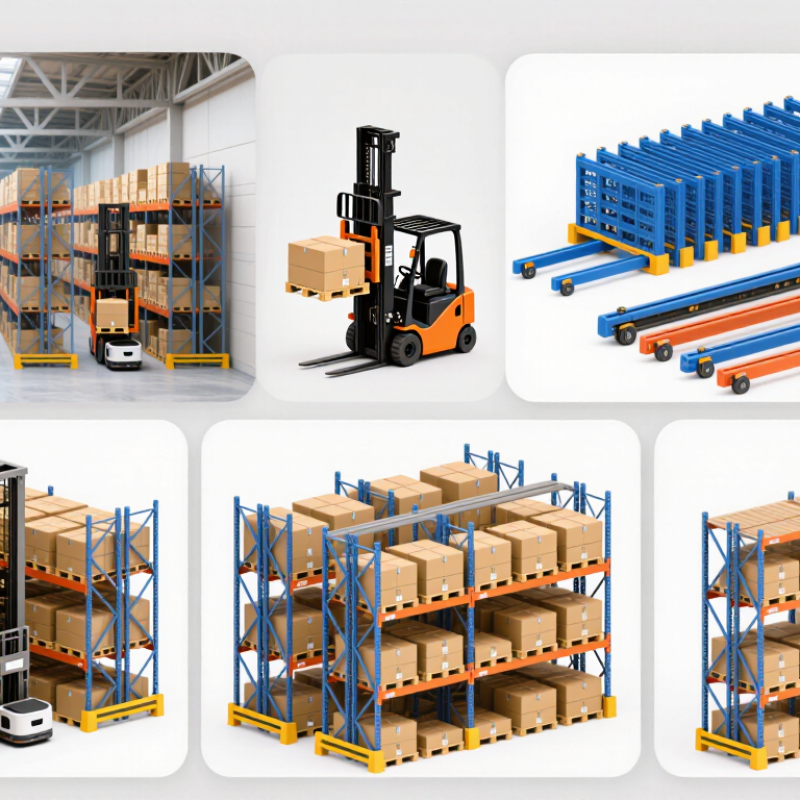
Narrow aisle storage systems use tighter rack spacing and specialized handling equipment to increase pallet capacity without expanding the building. In warehouse assessments, aisle widths often fall between 1.5 and 2.0 meters, depending on the truck and pallet size. These systems require accurate floor measurements, guided travel, and trained operators. Small errors matter.
For global buyers, seven practical options include selective narrow aisle racking, very narrow aisle racking, double-deep racking, mobile racking, carton flow racks, pallet flow racks, and automated storage systems. Each suits a different application. Selective racks support frequent stock rotation and broad product ranges. Very narrow aisle systems fit high-density distribution centers. Double-deep racks improve space use but may reduce direct access. Mobile and automated systems help controlled-temperature facilities, spare-parts storage, and high-value inventory. Carton and pallet flow designs work well for first-in, first-out operations.
Tips: Measure the largest load, not the average one. Check slab strength, fire clearances, rack protection, and local safety requirements. Leave room for maintenance access. A plan can look perfect on paper but perform poorly when pallets vary in size. Pilot testing is wise. Also, do not judge capacity by pallet positions alone; picking speed, visibility, and emergency access affect the real result.
Typical operating aisle-width ranges by storage system. Narrower aisles can increase pallet density, while wider aisles generally support simpler equipment and more flexible access.
Applications include high-density pallet storage, cold stores, e-commerce fulfillment, manufacturing components, retail distribution, and warehouses with limited floor space. Values are indicative industry ranges; final aisle dimensions depend on truck type, pallet size, rack height, building geometry, and safety requirements.
Comparing the Seven Best Narrow Aisle Storage System Types requires more than measuring aisle width. Selective narrow-aisle racks offer direct pallet access and simple maintenance. Double-deep racks improve density, but they reduce access to rear pallets. VNA turret systems use aisles near 1.6–2.0 metres wide. They need precise guidance and a stable floor. Reach trucks provide flexible handling for mixed pallets. Articulated trucks can work in narrow aisles while loading from the warehouse floor. Shuttle systems improve pallet throughput, especially with repetitive storage patterns. Mobile racks compress space further, yet movement speed and emergency access need careful review.
The 2024 MHI Annual Industry Report states that 55% of surveyed supply-chain professionals planned to increase technology investment. That figure supports automation discussions, but it does not prove that every warehouse needs a shuttle or VNA solution. In practice, labour availability, pallet turnover, ceiling height, and floor flatness usually matter more than impressive equipment specifications. VNA systems suit high-volume facilities with consistent pallet dimensions. Selective racks remain practical for varied stock and frequent picking.
There is a catch.
A system can appear efficient on a layout drawing but perform poorly during peak shifts. I have seen designs overlook battery-changing space, operator visibility, or damaged pallets. The 2023 LogisticsIQ warehouse automation market analysis also shows strong automation growth expectations, but forecasts can change quickly. Buyers should test travel paths, safety clearances, maintenance access, and actual throughput before approving a global specification.
Choosing among the seven best narrow aisle storage systems requires more than comparing rack height. In warehouse audits, I measure usable cubic capacity, aisle width, pallet weight, and forklift turning space. Very narrow aisle racks increase density, but they require guided trucks and precise floor alignment. Selective racks offer easier access, while mobile racks improve capacity but may slow retrieval during busy periods. Shuttle systems and automated storage units can reduce travel time, yet their controls and maintenance require trained staff.
Accessibility should match inventory movement, not only storage volume. Fast-moving cartons may need flow lanes, while slow pallets can use deep-lane storage. Safety depends on load ratings, impact protection, lighting, clear markings, and regular inspections. Automation adds sensors and software, but it does not remove human risk. A poorly configured interface can still cause errors. I have seen teams overestimate automation savings because replenishment delays were ignored. That assumption deserves review.
Tips: Test one aisle with real loads before full installation. Check emergency access, noise, battery charging space, and local operator training. Ask suppliers for capacity calculations and documented safety procedures. Leave adjustment room. Inventory changes. No layout stays perfect.
7 Best Narrow Aisle Storage Systems for Global Buyers
Matching Storage Systems to Warehouse Layouts and Product Requirements
Choosing a narrow aisle system starts with your building, not a product catalogue. Measure clear height, column spacing, floor flatness, fire routes, and turning space. Selective narrow aisle racking suits mixed pallets and frequent access. Very narrow aisle racking increases height and density, but requires compatible handling equipment and precise floor tolerances. Double-deep racking stores reserve inventory efficiently, although the rear pallet is less accessible.
Push-back racking fits several pallets of the same item and supports last-in, first-out movement. Carton flow racking helps operators pick small products quickly from gravity-fed lanes. Mobile shelving can reduce fixed aisles for cartons, tools, or archive containers, but it needs stable floors and careful load control. Mezzanine-supported storage adds usable levels when the building allows it. Automated shuttle systems offer high density, yet they demand reliable power, software integration, and trained maintenance staff. Automation is not always the cleverest answer.
Tips: Map product dimensions, pallet weights, order frequency, and rotation rules before selecting equipment. Leave safe clearance around sprinklers, doors, and emergency paths. Request load calculations and installation drawings from qualified suppliers. Test one aisle with real pallets and actual equipment. I have seen layouts look efficient on paper but create daily congestion at the turning point. Recheck the plan during peak-season conditions, not only on a quiet morning.
| Storage System | Typical Clear Aisle Width | Storage Density | Inventory Access | Stock Rotation | Best Product and Load Profile | Recommended Warehouse Layout | Key Planning Consideration |
|---|---|---|---|---|---|---|---|
|
Very Narrow Aisle (VNA) Pallet Racking
Best for maximum pallet selectivity
|
Approximately 1.5–2.0 m | High; more storage positions per floor area than conventional selective racking | Direct access to every pallet location | FIFO or flexible batch management | Standard pallets with many stock-keeping units, frequent picking, and high inventory accuracy requirements | Long, straight aisles with high clear height and a relatively regular floor plan | Requires suitable VNA equipment, precise floor flatness, wire or rail guidance, and careful aisle-end planning |
|
Double-Deep Pallet Racking
Best for higher density with good access
|
Approximately 3.0–3.5 m | High; typically adds a second pallet position in depth | Direct access to the front pallet; rear pallet access requires the front pallet to be moved | Best for LIFO or grouped batch storage | Homogeneous pallets with several pallets per SKU and moderate product variety | Parallel rack rows with sufficient maneuvering space for reach trucks or double-deep trucks | Requires stable pallet quality and disciplined slotting to prevent blocked inventory |
|
Mobile Pallet Racking
Best where floor space is expensive
|
One operating aisle opened as required; closed aisles are eliminated | Very high; can increase storage capacity substantially compared with fixed selective racks | Direct access when the required rack aisle is opened | FIFO or LIFO, depending on the rack configuration and operating method | High-value, low-to-medium velocity pallets, archives, cold storage, and space-constrained inventory | Compact blocks of racks installed on powered mobile bases over reinforced floor tracks | Higher installation cost, slower simultaneous access, and strict floor-load, safety, and seismic requirements |
|
Drive-In Pallet Racking
Best for dense bulk storage
|
Loading lanes are usually about 1.4–1.8 m wide, depending on equipment and pallet size | Very high; minimizes service aisles and stores pallets several positions deep | Limited; access is mainly by lane and is not fully selective | Generally LIFO; drive-through versions can support FIFO | Large quantities of the same or similar SKU, stable pallets, and low product variety | Deep rack blocks with dedicated loading and unloading faces | Not ideal for mixed-SKU lanes, frequent SKU changes, fragile pallets, or high selectivity requirements |
|
Pallet Flow Racking
Best for FIFO pallet rotation
|
Working aisles are commonly about 3.0–3.5 m; rack depth varies by design | High; storage lanes use gravity to reduce the number of operating aisles | Front loading and rear picking provide controlled two-sided access | FIFO by design | Perishable goods, date-sensitive products, food and beverage, and high-throughput pallet operations | Parallel lanes with loading on one side and picking on the opposite side | Requires accurate pallet dimensions, compatible pallet bases, lane brakes, and regular maintenance of rollers |
|
Pallet Shuttle Racking
Best for high-density batch storage
|
Service aisles are commonly about 3.0–3.5 m; shuttle lanes are deeper than conventional racks | Very high; deep lanes reduce the need for multiple forklift aisles | Access by lane, with an automated shuttle moving pallets inside the rack | Supports FIFO or LIFO, depending on lane arrangement and operating rules | High-volume pallets, cold rooms, seasonal goods, and products stored in multiple pallet batches | Deep rack blocks with forklift access at one or both ends of each lane | Needs compatible pallets, battery charging or power infrastructure, control procedures, and trained operators |
|
Automated Pallet AS/RS
Best for high-throughput vertical storage
|
Storage aisles can be approximately 1.5–2.0 m wide, depending on crane design and load unit | Very high; uses vertical cube and narrow, dedicated crane aisles | Computer-controlled access to defined pallet locations | FIFO, LIFO, or rule-based sequencing through warehouse software | Standardized pallets, high volumes, predictable workflows, and operations requiring traceability or labor reduction | Tall, straight aisles with fixed rack structures, conveyor interfaces, and controlled input/output points | Requires higher capital investment, reliable software integration, fire protection design, and strong maintenance support |
7 Best Narrow Aisle Storage Systems for Global Buyers?
For global buyers, narrow-aisle storage is not simply a space-saving purchase. The best option may be selective pallet racking, double-deep racking, very-narrow-aisle racking, mobile storage, carton flow, shuttle storage, or cantilever racking. Selection depends on product dimensions, turnover rates, forklift type, and expected growth. Start with accurate load data. Include pallet weight, height, aisle width, floor flatness, seismic exposure, and local fire requirements. Measure twice.
A reliable supplier should provide engineering drawings, load tables, material specifications, installation guidance, spare-parts information, and clear warranty conditions. Compare the landed cost, not only the factory price. Crating, insurance, customs processing, inland transport, local labor, and replacement parts can change the budget significantly. Installation should involve qualified local professionals who understand site conditions and applicable safety requirements. Remote support helps. It cannot replace a site inspection.
Maintenance planning should begin before commissioning. Schedule daily visual checks, monthly bolt and frame inspections, and periodic reviews of guide rails, sensors, wheels, and protective barriers. Keep frequently needed spare parts near the facility. Digital inspection records can reveal repeated damage and poor operating habits. In practice, initial assumptions often fail. Aisles may feel too narrow after peak-season traffic increases, or floor tolerances may affect equipment movement. A small pilot zone, followed by a 90-day performance review, can expose these weaknesses before wider installation.
Start with the building, not a product catalogue. Measure clear height, column spacing, floor flatness, and turning space. Match the system with pallet weights, product sizes, and order frequency.
It increases storage density by using taller racks and narrower aisles. However, it needs guided handling equipment and precise floor alignment. Small floor errors can create daily operating problems.
It suits warehouses with mixed pallets and frequent access. Operators can reach individual pallets more easily. This flexibility may reduce maximum storage density.
These systems store reserve inventory efficiently. The rear pallet is less accessible, so they suit slower-moving goods. Check rotation rules carefully before installation.
Carton flow lanes support quick picking from gravity-fed channels. They make popular cartons easier to reach. Replenishment delays can still appear if stock planning is weak.
Mobile shelving can reduce fixed aisles for cartons, tools, or archive containers. Mezzanines add usable levels when the building structure allows them. Stable floors and controlled loading remain essential.
No. Sensors and software can reduce travel time, but trained staff are still necessary. Poor interface settings can cause errors. Automation is not always the cleverest answer.
Review load ratings, impact protection, lighting, floor markings, and emergency access. Keep clearance around sprinklers, doors, and fire routes. Check noise and battery charging areas too.
A real-load test reveals turning congestion, retrieval delays, and equipment conflicts. Use actual pallets and peak-season conditions when possible. Quiet mornings can make weak layouts look efficient.
Request capacity calculations, installation drawings, and documented safety procedures. Ask about maintenance, power reliability, and operator training. Leave adjustment room because inventory changes. No layout stays perfect.
Narrow Aisle Storage systems help warehouses increase pallet capacity while preserving efficient access to inventory. The seven leading options include selective narrow-aisle racking, very-narrow-aisle systems, double-deep racking, mobile racking, drive-in racking, push-back racking, and carton-flow solutions. Each type offers a different balance of storage density, product accessibility, stock rotation, and handling speed. Buyers should compare load capacity, aisle width, forklift compatibility, operator safety, and automation features before making a decision.
The best system depends on the warehouse layout, ceiling height, product dimensions, turnover rate, and required picking method. Global purchasers should also evaluate delivery conditions, installation expertise, spare-parts availability, staff training, maintenance support, and compliance with applicable local safety standards. A carefully selected solution can improve space utilization, reduce handling time, and support reliable long-term operations across different warehouse environments.

Jracking